Plant propagation notes
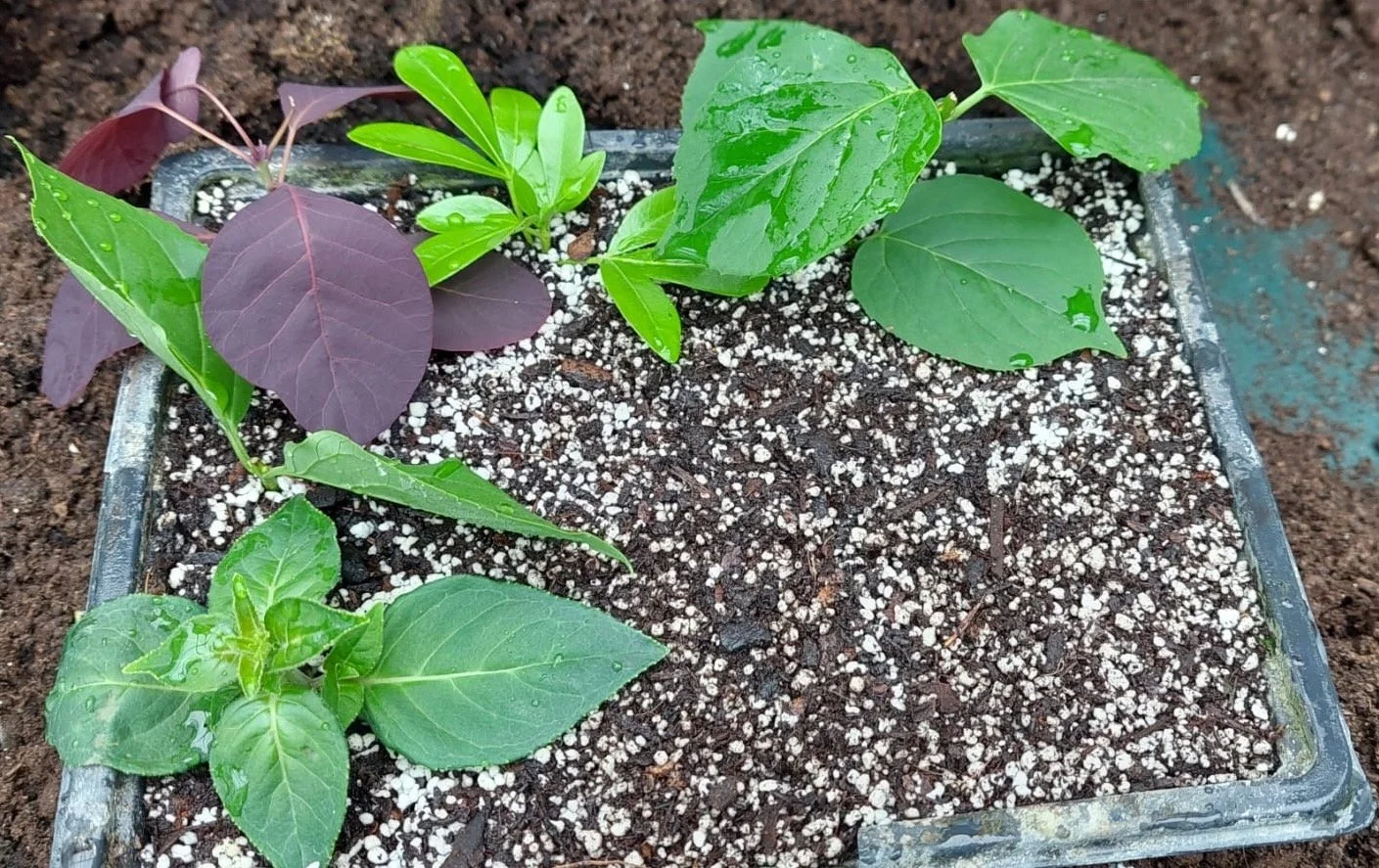
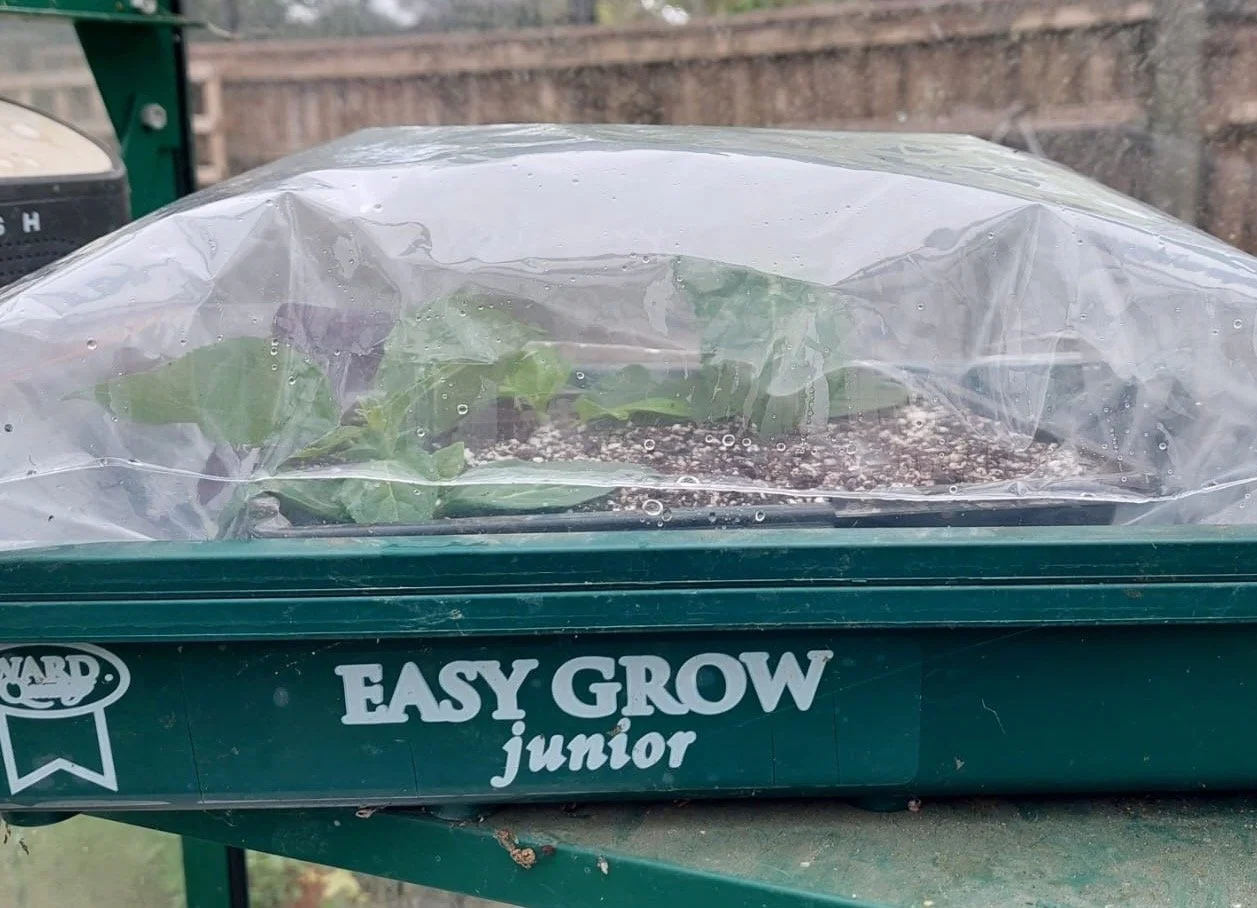
Following Alan Harvey’s talk on Plant Propagation at the May 2026 meeting, a number of members have asked for a recap of some of the points he made. Sue has kindly put together these notes:
Cuttings
Softwood cuttings are best taken in spring from new (juvenile) growth
The cutting should ideally be 8 - 9 cm long, although shorter cuttings may be successful for some plants e.g. choisya
Take the cutting when the plant is turgid
To prevent the material from drying out, immediately put in a plastic bag. Special bags are available (& expensive) which are black on the outside and white on the inside but an inside-out compost bag works equally well
Cut 2 – 3mm below a node
About 1/3 of the stem should be stripped of leaves, leave the remaining 2/3 leafy growth, including the tip
There is no need to wound the stem for softwood cuttings
Root cuttings in a seed tray.
Over-fill tray with a mix of perlite (not vermiculite) & compost (50:50 mix). Make sure you wet the perlite before use as the dust is an irritant. Bang the tray on the table to settle the compost then remove the excess using a seed tray tamper in a sawing motion, which flattens the compost
Press down in the corners of the tray with your fingers then top up the depressions with more compost mix
Remove compost from the rim to the tray to reduce likelihood of disease
Push the prepared cuttings into the compost until the leaves are level with the soil.
Fill the tray left to right and back to front
Ideally put only one kind of cutting in a tray
Cuttings do best with bottom heat but with cool foliage. Ideally place in a propagator in a cool room
They need high humidity; water from the top with three passes of a watering can
Dappled shade is ideal so cover the propagator with shade netting or newspaper
Nodal cuttings can also work well (but not as well as tip cuttings) – use a 3-node length of shoot which has no tip. Internodal cuttings are probably the least reliable. These have no node at the bottom and the snag above the leaves removed.
Seeds
Prepare the seed tray as above but omit the perlite. The compost should be firmed sufficiently so that the tray may be held vertically without the compost falling out.
Sow fine seed from your folded palm or from a sheet of paper to control the flow
Sow left to right and back to front and press the seeds down gently
Cover the seed with vermiculite
Water the seeds from below by standing the seed tray in a tray of water
Brushing the seedlings lightly with a sheet of paper will make them sturdier
Notes by Sue Pennicott, photos by Judy Taylor