One to watch out for if you grow fuchsias
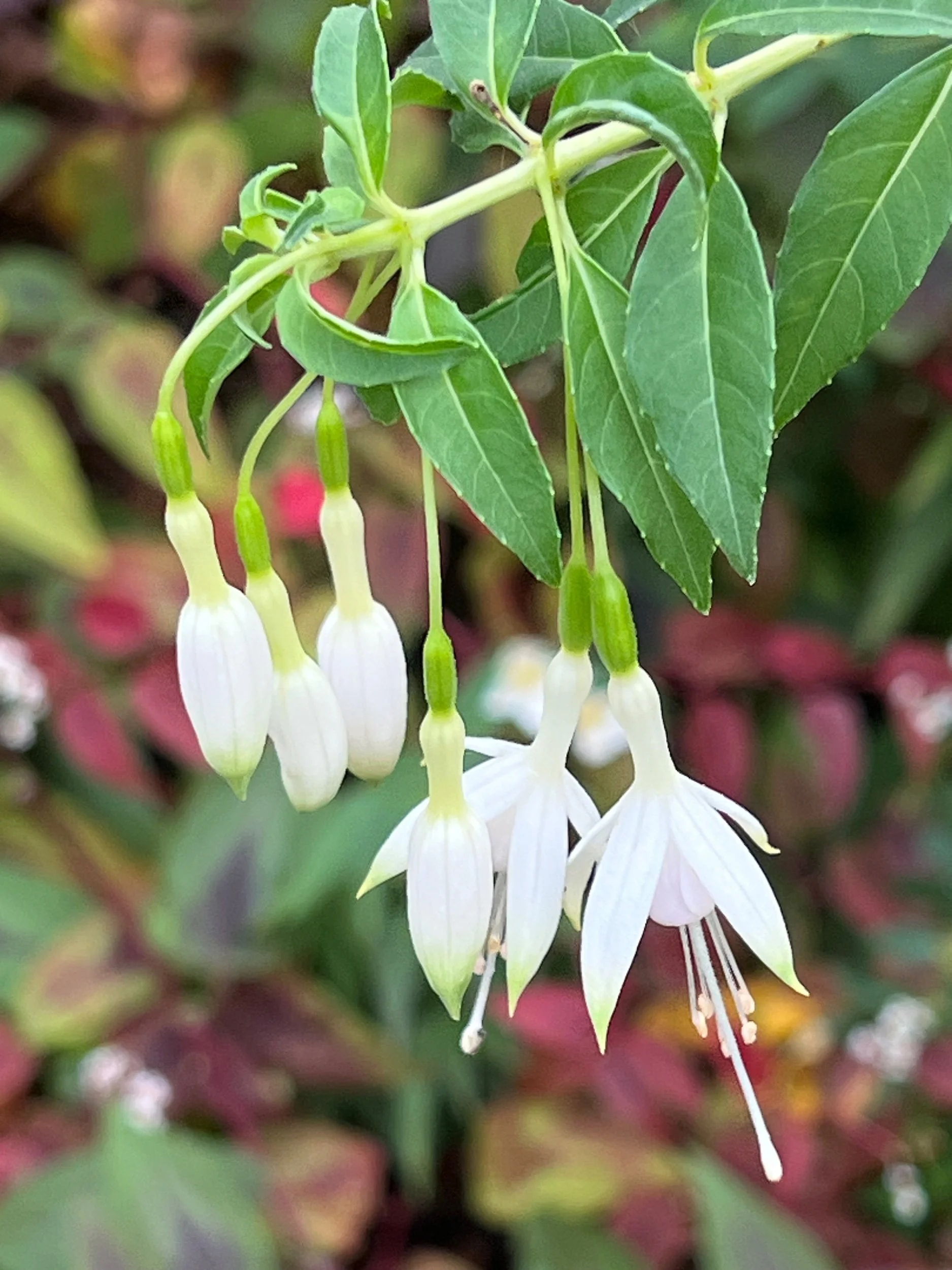
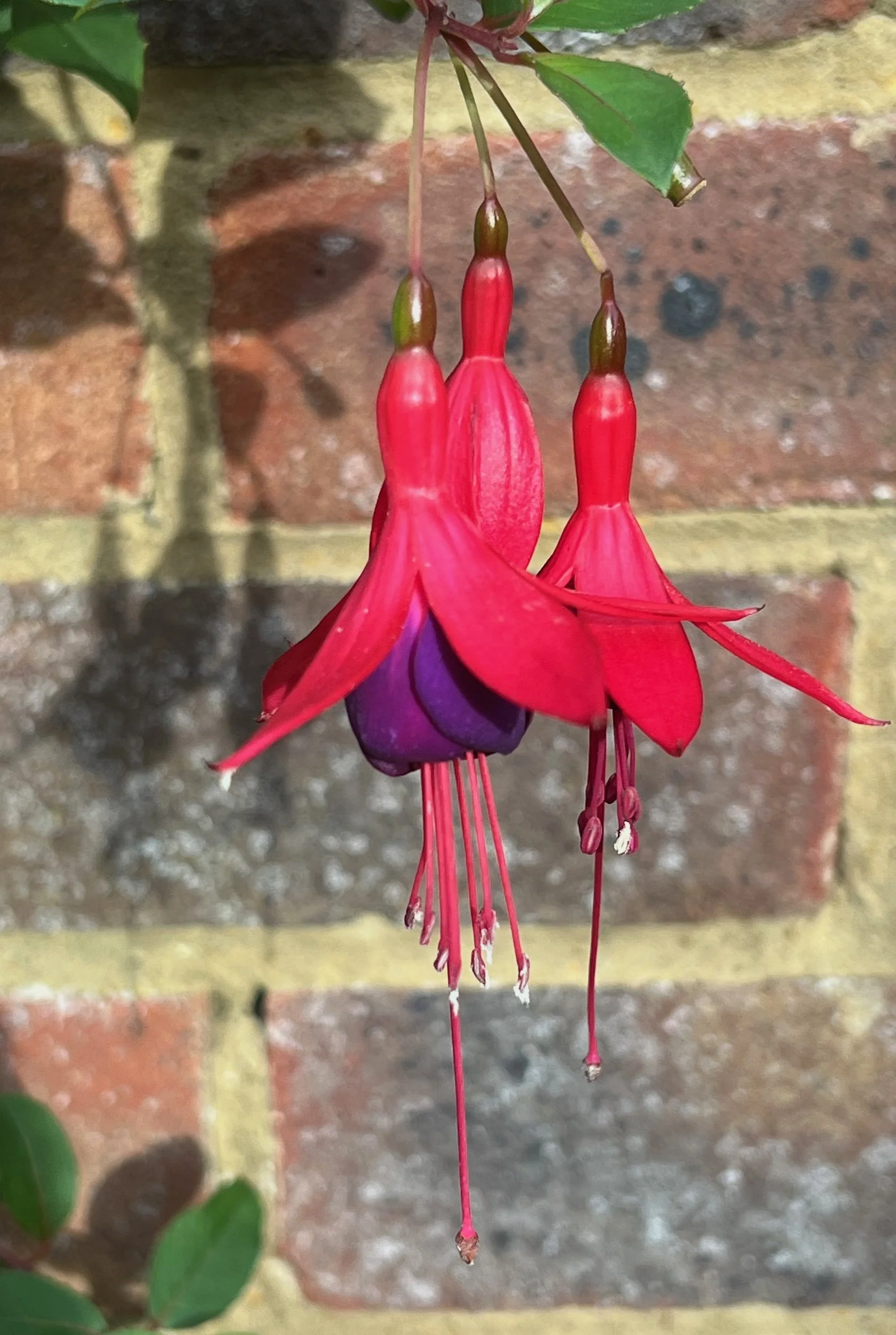
Don’t hardy fuchsias make a great impact in late summer/autumn? They have been a main stay for their colour and form in my garden for years. Then it was last year when Alys first spotted something wrong with a few of the delicate Fuchsia Magellanica ‘Hawkshead’ plants - the tips of the shoots had become a mass of yellowish green distorted tissue She had come across it in other local gardens and knew that this was a sign of fuchsia gall mite. I investigated the problem on the RHS website.
First discovered in Brazil in the late 1970s, it has since spread elsewhere, including California, France, Germany and the Channel Islands. The mite was discovered on the mainland of Britain in Hampshire in Sept2007 and is spreading. They affect new growth of both hardy and non-hardy plants at the shoot tips by sucking sap and secreting chemicals that prevent the normal development of leaves and flower. As the numbers of mites rise, foliage becomes increasingly distorted until plants no longer produce normal leaves or flower buds.
If I remember rightly, last year there was no recommended means of control, other than removing the affected shoots, which we did. There was also the suggestion that the mites couldn’t survive temperatures of less than 5°C (41°F). As all my fuchsias are hardy, I took slight comfort in that and noting that Magellanica fuchsias are particularly affected - so maybe my splendid bush Fuchsias ‘Army Nurse’ wouldn’t be affected.
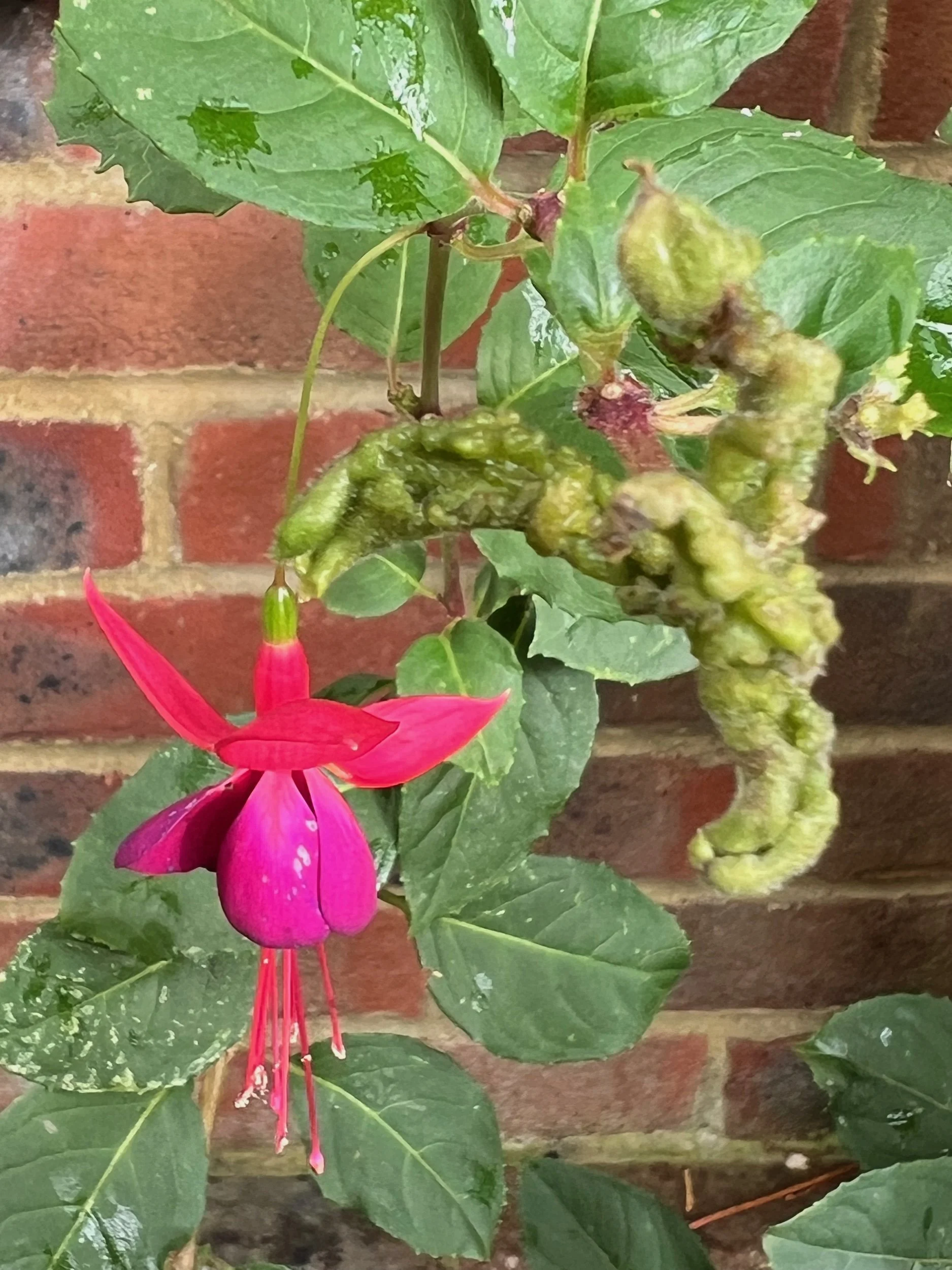
Over the winter I was pleased to see some frosts, so was hopeful that the mites had been killed off.
Sadly not, this year some of the Hawkshead didn’t come up at all, some very weakly, and some that came up well with plenty of leafy growth had many fewer flowers than usual. Worst of all one of the Fuchsia ‘Army Nurse’ plants has been affected too. Clearly the mites survived the cold, so I went back to the RHS for the latest advice.
Apparently spread by wind and insects in the warmer months, the mites overwinter under bud scales but may remain active during the winter on glasshouse fuchsias. Cutting off affected shoot tips will remove many mites but regrowth is likely to be affected. Affected material can be disposed of in council waste or buried to reduce the likelihood of spreading the mite. A predatory mite (Amblyseius andersoni) is sold as a biological control of the mite. The suppliers advise that if you have had the mite in previous years, or if your plants are already infected, then affected growth should be cut out to at least 10 cm below any galls or distorted tissue. Then introduce the predator to prevent the mite causing damage to regrowth.
Not having had much success with biological controls in the past, I’m dubious. So we have cut all of the fuchsia plants right down to the ground in the hopes that all bud scales have been removed. Then we disposed of the waste in general council waste, definitely not compostable waste, and are waiting to see what happens next year. Fingers crossed!